Google Chromebook: Is It For Me?

Welcome to the first of a recurring series here on my Making Technology Simpler blog: “Is It For Me?” I’ll explain a product or technology, then help you figure out if it meets your needs. This week’s subject is the Google Chromebook.
Chromebook laptops
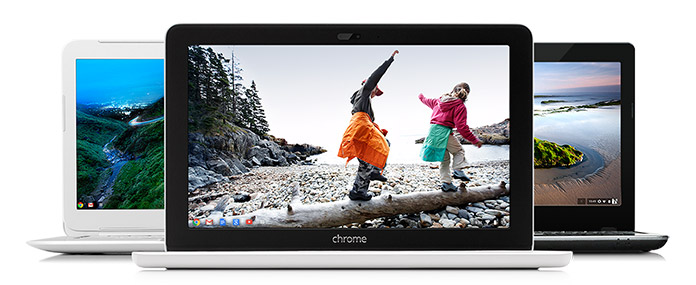
Google Chromebooks (Photo courtesy of google.com)

Google Chromebooks are a series of inexpensive laptops with great battery life, strong integration with Google, and little maintenance needed.

Chromebooks use an operating system created by Google called Chrome OS…the whole operating system is basically the Chrome Internet browser that many people use on Windows and Mac computers. The computer hardware is made by companies like Acer and HP.

Pros

Here’s another thing that makes Chromebooks unique among laptops: the whole operating system is designed to be used with Internet access, and the hard drive in the computer is tiny.

Google intended for these computers to be used in conjunction with Google’s cloud storage, so photos will need to be stored in Google+ and documents stored in Google Drive. (I wrote about cloud storage here.) With everything stored in the cloud, there’s no need for a big hard drive. The benefit of this is the computer will boot up very quickly.

This reliance on cloud storage has a couple other ramifications. On the positive side, no data backups are needed, since almost everything is in Google’s cloud. And once the computer needs to be replaced, you can sign into your next Chromebook with your Google account, and all your emails, documents, etc. will be available immediately. No file transferring necessary.

Cons

On the flip side, you will be limited in what your Chromebook can do without Internet access. You can do some document creation, for example, and the document will save to Google Drive when you connect to the Internet again. Internet access is becoming more widespread, however, and some Chromebooks will allow you to also connect to a 4G network through a carrier like T-Mobile.

Because almost everything you do on a Chromebook involves Internet access, the speed of the computer itself will be heavily influenced by the speed of your Internet connection. If you regularly use a slow connection, be prepared to pay for faster speeds to really enjoy a speedy Chromebook experience.

The other main limitation of Chromebooks is that you can’t install PC or Mac programs on it. So if you really need the full version of Microsoft Office or some specialized accounting program for your work, a Chromebook isn’t for you (unless it’s as a secondary computer). You’re limited to using Google’s apps and others available through the Chrome web store.

Ease of use

Chromebooks are low maintenance devices, partly because they update automatically and Google says they’re very secure and have no need for antivirus software.

Setup is also easy, to the degree that you’re already part of Google’s services. If you already use Google for email, documents, photos, and music, your new Chromebook will be ready to go as soon as you open it and sign in with your Google account.

If you use iTunes for your music and store documents or photos on your current computer, you’ll want to transfer all of it to Google’s appropriate online service before you make the switch to a Chromebook. (And if you have an iPhone, iPad, or iPod, know that they won’t sync with music on your Chromebook.)

Remember, third-party apps like iTunes or Microsoft Office can’t be installed on a Chromebook. So you’ll need to use a Google service or a third-party service that can be accessed online (such as Pandora for music streaming or the online version of Microsoft Office).

Is it for me?

A Chromebook might be great for you, if:

  • You use Google for all of your email, documents, photos, media, and calendar (or are willing to move all those things to Google)
  • You have Internet access almost all the time
  • You need a very portable computer with a battery that lasts all day
  • A low up-front cost is important to you

You should probably stay away from a Chromebook, if:

  • You need an application that only runs on a PC or Mac, like Adobe Creative Cloud, Microsoft Office, or iTunes
  • You prefer to store your documents, photos, or media locally (i.e. on your computer’s hard drive)
  • Your computer needs to handle intense tasks, like games or video editing

Have you seen or heard about another device or technology that’s made you ask, “Is it for me?” Let me know below, and I’ll write about it soon.

-Paul

Go back

Your message has been sent

Warning
Warning
Warning
Warning

Warning.


Which cloud storage service is best for you?

Note: this is a follow-up to last week’s explanation of cloud storage.

Cloud storage comparison
The logos of Dropbox, iCloud, Google Drive, and OneDrive (clockwise from top left)

There are lots of companies that offer cloud storage, and several of them are quite well known. This post is going to focus on the services that I (subjectively) view as the major players, and which service is best for you.

I feel certain that there is no one cloud storage service that is best for everyone. Instead, I think that each has certain advantages depending on how you use it and which devices you use.

As I mentioned last week, I actually do not pay for storage from any of the companies that I will describe below. I use the free storage amount from several different companies: Dropbox, Google Drive, and iCloud from Apple.

This isn’t a very practical long-term solution, because I’ve got many more files on my computer and other devices than can fit in the free storage allotments. And the more providers I sign up for, the harder it gets to keep track of what files I’ve stored on which service.

So I recommend using the free storage space each provider offers as more of a trial run. You get to see how the service works without plunking down your money first. Once you decide which one works best for you, then decide how much storage you need to pay for.

I’ve only recently begun to feel that paying for a cloud storage subscription might be worth the money for my family. By using those three services, I’ve started to get an idea of which one I’d prefer to pay for.

So without further ado, here’s a comparison of the four main cloud storage providers[1].

Dropbox

Dropbox logoDropbox is the platform that really first made cloud storage usable for the ordinary folks like us. It’s also unique on this list because the company was created around this cloud storage service; the others on the list are branches of much larger tech companies.

Pricing: 2GB free…1TB $10/month

Pros: Available on almost any device, simple pricing plan, very customizable

Cons: Smallest amount of free space, not automatically integrated with Google, Apple, or Microsoft

Best for: People who own a mixture of devices, such as an iPhone, Windows PC, and Kindle Fire.

Google Drive

Google DriveFormerly known as Google Docs, Google Drive is available with any Google or Gmail account. Included with Android phones, whose software is made by Google.

Pricing: 15GB free…100GB $2/mo…1TB $10/mo (Free space is shared with Gmail and Google+ storage)

Pros: Most free storage, familiar design to users of Gmail’s website/apps

Cons: Stores and shares files, but not many other features

Best for: Android phone users or people who use Google products heavily

OneDrive (Microsoft)

OneDriveFormerly SkyDrive, Microsoft has revamped their cloud storage service and OneDrive is a big part of their focus with the newer Windows operating systems.

Pricing: 15GB free…100GB $2/mo…200GB $4/mo

Pros: Works extremely well with Microsoft Office, generous free storage

Cons: File sharing not as simple as others

Best for: Microsoft Office users or those with newer Windows computers/tablets

iCloud Drive (Apple)

iCloud DriveFormerly called just iCloud, Apple’s revamped storage service was updated this fall. iCloud Drive is notable for features tied in with Apple devices, such as backing up the entire device and locating the device if you lose it.

Pricing: 5GB free…20GB $1/mo…200GB $4/mo…500GB $10/mo…1TB $20/mo

Pros: Coordinates data and settings between multiple Apple devices, new family sharing helpful for family accounts

Cons: Less free storage, no Android app

Best for: Those with multiple Apple devices

Conclusions

As you can see, pricing is very competitive between the providers. I expect storage allowances to continue to rise in the coming years, making it even more feasible to store almost everything on your computer in the cloud.

To me, the biggest difference among the services is the integration with other software/hardware made by the companies.

Dropbox only does cloud storage, and is a good option for those with a variety of device types. Outside of those rare cases, I think it’s at a disadvantage because it’s not tied in with one of the other major companies.

For those who use Google or Apple products heavily, I think Google Drive or iCloud Drive will work really well. I use Apple products heavily and love the features of iCloud, and I’m sure the same is true for Google/Android fans.

OneDrive (the only one of these I haven’t personally used) seems like a great fit for those who use Microsoft Office often, or have a newer Windows PC or tablet. If you use the newer versions of Windows or Microsoft Office, I’d recommend giving OneDrive a try. It’s not as well known, but I see it as a great option for many people.

——————–

Which of these do you use, and what’s been your experience? Do you have a favorite I haven’t mentioned? Join the conversation below! I’d love to hear from you. 

–Paul

Go back

Your message has been sent

Warning
Warning
Warning
Warning

Warning.

1 – Amazon also has a cloud storage service. Although I haven’t included it in this comparison, if you use Amazon frequently or own their devices (such as Kindles), consider checking out what they offer here.

Cloud storage explained

10 years ago, if you mentioned “the cloud” to me I would have looked up at the sky. If that’s your first reaction to the phrase, don’t worry! “The cloud” is one of the most-used and least-explained tech terms right now. Let’s put it in plain English.

What is cloud storage?

Since computers were invented, data has been stored on physical media (punch cards, floppy disks, thumb drives, etc.). When you want to transfer data from one computer to another, you physically carry your storage media from one computer to the other.

For example, I start writing a report on my work computer, save it to a thumb drive, and then plug the thumb drive into my computer at home to finish editing the report. That’s how most of us are used to doing things.

Cloud storage
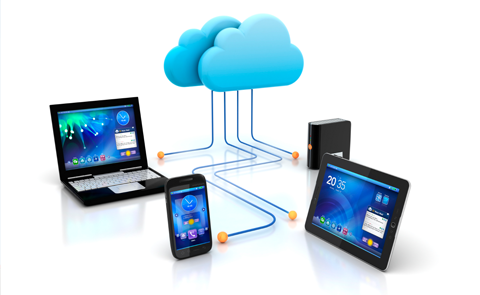
This is what “the cloud” might look like — if it were an actual cloud. (But really, this is a pretty good illustration of how data is stored in a remote location and can be accessed by multiple devices.)

When people refer to “the cloud,” what they generally are talking about is data being stored in a server (i.e. a specialized computer) that’s connected to the Internet. This means any computer connected to the Internet can have access to that data, even at the same time.

So in practice, I would start my report at work, save it to the cloud, then log in and edit it from my home computer. When I’m finished, I can download a copy to store it on my computer if I want. Notice that in this situation I don’t have to physically carry anything home with me. The document is stored on a hard drive that’s connected to the Internet, and the hard drive is owned and maintained by the company providing the service (such as Dropbox).

Benefits of cloud storage

Cloud storage has been exploding in popularity. The services that are most well-known include Google Drive, Dropbox, Microsoft’s OneDrive, and Apple’s iCloud Drive. (I’ll compare these in detail next week to help you figure out which might work best for you.)

Google, in fact, makes a line of inexpensive computers (Chromebooks) with relatively tiny hard drives, specifically because they expect that users will store almost all their data on Google Drive.

As I mentioned, I can download or edit my document in the cloud from any computer with Internet access. I can give other people permission to access it, also from any computer with Internet access.

Google Drive collaboration
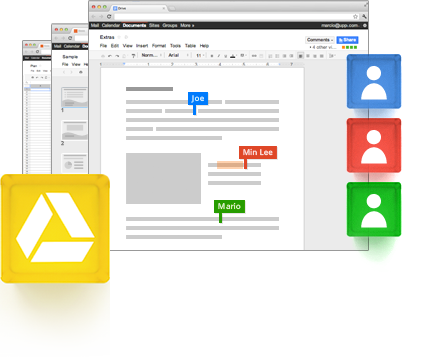
Joe, Min Lee, and Mario editing a document at the same time, from different locations (in Google Drive)

This allows for another major benefit of cloud storage: multiple people can edit a document at the same time, collaborating in real time and seeing each other’s changes as they happen.

Until now, I’ve been discussing cloud storage in relation to computers. Perhaps you’re thinking, Why shouldn’t I just use a thumb drive? Every computer has a USB port.

That’s true, but more and more people are creating and using data on devices like smartphones (taking photos, for example). Many of these portable devices don’t have USB ports, so cloud storage allows people to access and share data much more easily than they would otherwise.

For example, if I kept all my photos on my phone, it would quickly run out of storage space. But if I upload the photos to a cloud storage service, I can access all of them anytime my phone has Internet access. Plus, I can also view them from any other device I use.

Are you starting to see the benefits?

Disadvantages of cloud storage

Of course, there are downsides to cloud storage compared to saving your stuff on your hard drive. Let’s touch on the main ones.

First, and this is the one that keeps me from using cloud storage more, most companies that offer cloud storage charge a monthly or yearly subscription. The cost depends on how much storage space you choose. Typically a small amount of storage is free, such as 5GB on iCloud Drive. This is enough space for a lot of text documents. But if you add in music or photos, that space will be eaten up quickly. And then you’ll pay for the higher storage amounts. (Again, I’ll give more details next week.)

Thumb drives and external hard drives aren’t free either, and you’ll have to weigh the upfront cost of buying that type of storage compared to the subscription cost of cloud storage. I’ve become very used to having my files stored in a drive I physically own, and it’s hard to get used to the idea of paying regularly for the storage.

Second, data you store in the cloud is physically stored in some remote location, not on your desk. This means you’re trusting that your data will be available when you want and won’t just disappear. Also, it means that someone can potentially hack into your account and steal your files.

For the record, I bet every cloud storage company backs up their customers’ data better than you back up your own computer. As for hackers, it seems that hacking situations are caused more often by people using easy-to-guess passwords or reusing passwords from other accounts, than by companies using poor security on their end.

Either way, I wouldn’t  keep personal/confidential files in cloud storage, and I would make sure that my most important files are also stored on a hard drive I own.

Third, data stored in the cloud is only accessible to you when you have Internet access. Internet access is growing, and some devices like smartphones are connected even when you travel. But keep in mind that what you put in the cloud can only be accessed when your device is Internet-connected.

You should use cloud storage, but which provider?

I think cloud storage will continue to be used even more often in the future. It will be especially helpful for those who own multiple devices and want to share files between them.

I’ll help break down the differences between the major cloud storage providers in next week’s post, so stay tuned! Until then, I hope this overview helped you understand what exactly cloud storage is. If you have any questions about it, please ask them below. I’d love to hear from you!

Go back

Your message has been sent

Warning
Warning
Warning
Warning

Warning.

Self-driving cars and why we shouldn’t be afraid of technology

Google self-driving car
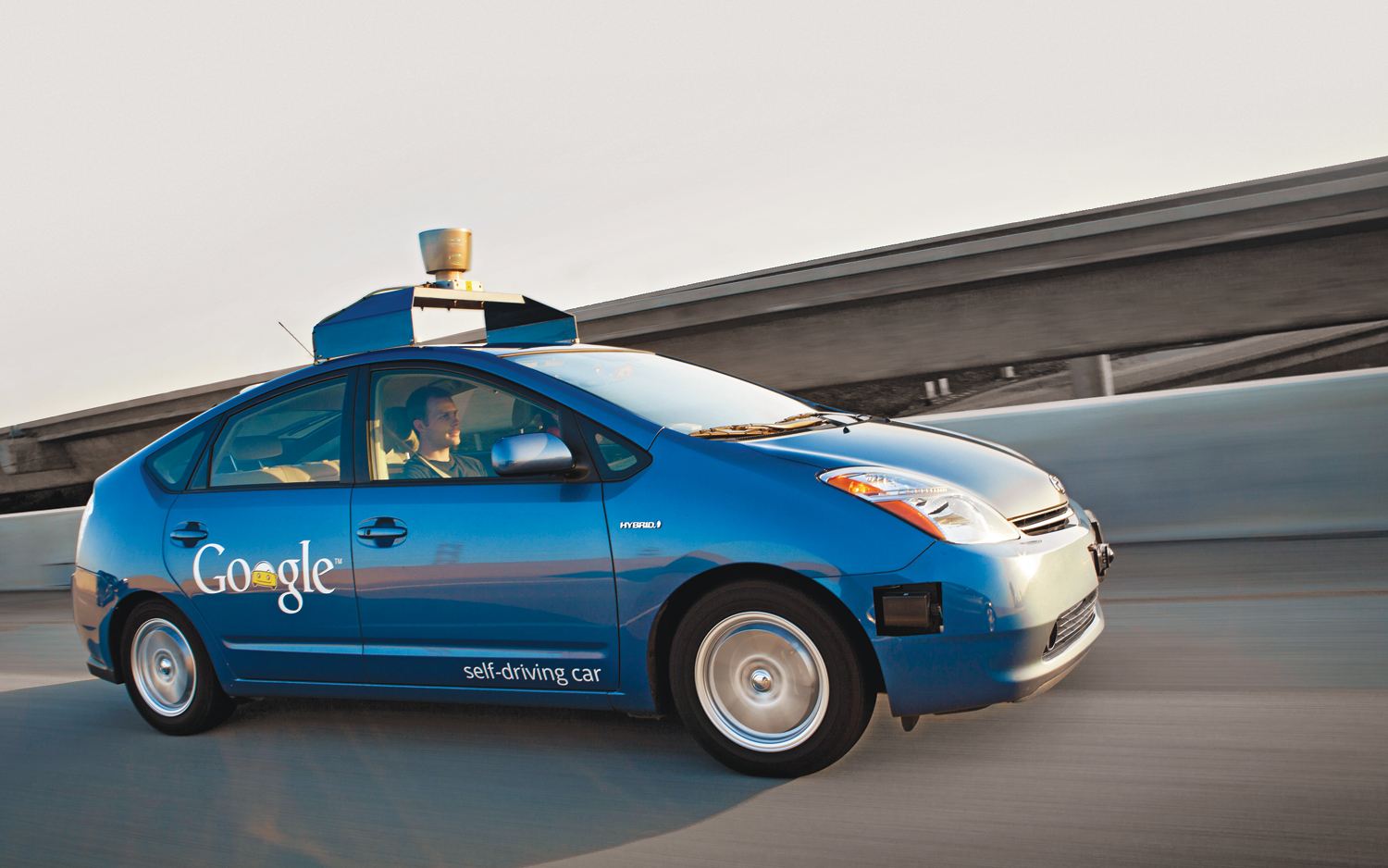
One of Google’s self-driving cars in action (Photo courtesy of motortrend.com)

Google is working on creating self-driving cars. They’ve already been testing these cars on roads in California. Think about that for a moment.

I think it’s a safe bet that within 10 years (probably less) we will start seeing self-driving cars on the road. You’ll look over at the car next to you, and the person in the “driver’s seat” will be fast asleep. How does that make you feel?

If it makes you nervous, you’re not alone. I’m no historian, but I think back to the books I read in high school English classes and I can remember several that painted worlds where technology had led to a terrible future (1984, Fahrenheit 451, and Brave New World come to mind). This fear of technology isn’t new.

Every technology can be abused, but each can be helpful in certain ways as well. I don’t think that should scare us. After all, isn’t that true of everything in this world around us, technology-related or not?

On an individual level, the reasons we fear technology are many. I’ve tried to boil this down to several primary reasons, but I’m sure there are more I haven’t thought of. I’ll try to unpack each of them, and then tell you why we needn’t fear technology for that reason.

Technology changes too quickly! 

For some people, this is an annoyance[1], but for others it’s really scary because we feel out of control. If I buy this, will it be out of date in two years? Why do I even need this thing? What are my kids doing on their phones these days?

It can be tough to keep up with the crazy pace of changing technology. The good news: most of the time we don’t have to. Do I really need a new TV with a bunch of features, or will a simpler one do the job? Do I need to upgrade at all? And if I buy a well-made gadget and take care of it well, then I probably won’t need to replace it as often as the advertisements tell me I should.

I don’t know how to use new technology! 

We’re all gifted in different areas, and for many people learning new technology is not where they’re gifted. Troubleshooting the gadgets you do own can also be really intimidating.

When it’s time to venture into unknown territory with some technology you’ve never used before, get someone to help you understand it. Look for a product that’s simple and durable. Sometimes that’s the newest model, but often it’s not. And don’t be afraid to ask for help when you’re learning how to use it. We’ve all run into problems we don’t know how to fix, so there’s no shame in asking for help.

I don’t want to become dependent on technology! 

Technology promises to make life easier, but what if it works too well? If Google went down, how would we learn anything? If my computer crashed, would I lose all the photos I’ve ever taken? 

The reality is we depend on technology every day. Refrigerator, car, medicine…they make our lives easier and we so often take that for granted. We place a lot of trust in things we have no control over every day, whether we realize it or not. I think we can choose to enjoy and be thankful for these blessings and still be mindful of the fact that we may not always have them.

Technology is make me (or my kids) dumber! 

Harry S Truman
The Google search took 0.25 seconds (Photo courtesy of whitehouse.gov)

Technology makes some things so much easier than they used to be. Parents often hand their young children their iPhone as a pacifier. Kids don’t memorize all the presidents, because they can just go to Google and see that the 33rd president was Harry S. Truman. (His middle name was actually the letter “S” by the way.) Children don’t even learn cursive in school anymore!

Things are certainly very different for this generation than previous ones. But hasn’t that always been the case? At some point in time, kids no longer had to go chop firewood because the family home was heated with oil. Did that make that generation lazier than their parents’ generation, who chopped wood as kids? No, and in fact it probably gave the children a bit more time to study or go to baseball practice or whatever else they were involved in.

I freely admit that many kids miss out on life experiences because they spend so much time staring at a screen. But that’s not the fault of technology; allowing that is a choice their parents make. I sometimes fall into the same problem those kids do. But it’s not my phone’s fault; it’s mine, because I choose how I interact with the technology around me.

Technology in the hands of the government/terrorists/hackers/corporations/public/robots will destroy society and the world as we know it! 

This is the fear in our hearts that is touched by so many dystopian novels, most recently and notably The Hunger Games. We fear that those with power will abuse technology for their own purposes. The fear is even greater when it’s a technology we’ve heard of but don’t understand.

To a certain degree this has been happening for centuries and I’d argue even millennia, whether the technology be related to farming, communications, weapons, or computing. And I have no doubt it will continue to happen; we can expect no less from imperfect, fallen people. But we need not fear it!

In Matthew chapter 6, Jesus says “Therefore I tell you, do not worry about your life, what you will eat or drink; or about your body, what you will wear. Is not life more than food, and the body more than clothes? Look at the birds of the air; they do not sow or reap or store away in barns, and yet your heavenly Father feeds them. Are you not much more valuable than they? Can any one of you by worrying add a single hour to your life?”

Worrying won’t help us.

In day-to-day life, let’s focus on using technology in ways that makes our lives simpler and more enjoyable. To the degree we can, let’s look for ways technology helps instead of hurts, and make sure those in power don’t abuse it. But instead of worrying about what we can’t control, let’s trust the One who does control everything and has promised to make all things new.

A vision of busy streets full of cars driven by computers can be scary. I can immediately think of many problems that might arise. But with human drivers, car crashes are already one the leading causes of death in the United States. Maybe self-driving cars will get us around more safely. And I also think of people who can’t physically drive a car (elderly, disabled, etc.) who would be able to maintain more independence with a car that can take them to the grocery store and back.

Like every technology, self-driving cars will be used in bad ways by some, but I’m equally sure they will also bring big and small benefits to many people. Let’s be thankful for the cars we have now, and if we ride in driverless cars one day, we can be thankful for that, too.

Did I miss anything? I’d love for you to be part of the conversation by commenting below and sending me a message.

Go back

Your message has been sent

Warning
Warning
Warning
Warning

Warning.

1 – For example, I owned every Star Wars movie on VHS…and then last one was released only on DVD. Annoying!

Mac vs. PC

Apple and Microsoft logos
Aaaaaand in this corner… (Photo courtesy of apsotech.blogspot.com)

A reader writes in: “At my school, they promote Mac laptops over PC’s. What are the difference between Mac’s and PC’s? Is one better than the other? Thanks!”

When I was looking at different options for universities, I noticed one of my top choices required journalism majors to have a Mac. I’d only used Windows PCs before[1]. So I started researching. I ended up going to a different school, but I did buy a Mac for college.

That computer lasted me 5 years, and when it died I bought another Mac. I know there are a lot of people who are fanatical about one system or the other. I have experience with both Macs and PCs, and I’ll give you as unbiased of info as I can.

First though, check out this Apple ad from 2006:

http://www.youtube.com/watch?v=4nMvca9JaUo

I think it’s a good laugh (apologies to any of you who have recounted your vacations with a pie chart). In reality though, Macs and PCs are much more similar than this ad implies (and PCs do a lot more than spreadsheets!) There are differences, however, and here are the main ones I see between the two:

Advantages of Macs:

-Apple makes both the hardware and software for Macs. In contrast, Microsoft makes the the software (Windows) for PCs, while other companies make the hardware (Acer, Dell, HP, etc.)[2]. If you buy an HP laptop, it will often have some HP software installed on it, plus trial versions of software like anti-virus. By contrast, all software that comes with a Mac is made by Apple, so no extra, hidden software eating up your computer’s performance.

-Likewise, Macs do come with apps like iPhoto and iMovie, which can be very helpful for organizing your photos and creating home movies.

The vast majority of viruses and malware are created to target Windows computers[3]. These problems are so rare on Macs that many people say Mac owners don’t even need antivirus software. (Of course, you should always use good judgment when clicking on websites and downloading files, regardless of your operating system.)

The parental controls options and backup software included on Macs are much easier to access and use than on PCs (although Windows 8 has made backup simpler).

Apple has better support, both online and in-person at their Apple Stores. In addition, when Apple updates their operating system, Mac users get to download it for free. On the PC side, you still have to pay to upgrade to new Windows versions (unless you buy a new PC).

Advantages of PCs:

PCs have many more options available. In addition to many different hardware manufacturers to choose among, each of those manufacturers often offer more choices than Apple does with it’s PCs. The choices include color, design, size, and many internal choices, too.

PCs are much more upgradeable (is that a word?). Macs are becoming less able to be upgraded without taking them in to an Apple store. By contrast, a PC user could replace almost any internal hardware from home.

-Here is the most obvious difference to most people: PCs are almost always less expensive. The cheapest Mac laptop currently costs about $900 regularly, while comparable PCs run about $700. And there are options among PCs even cheaper than that.

Conclusions:

-If your work or school requires a certain operating system, don’t look to me for help!

-If you want specific customization options or want to build a computer for a specific purpose (like computer games), definitely go with a Windows PC.

-If you are interested in trying things like editing photos or videos, or recording music, look for a Mac, which has great apps for those things built-in.

-For the average person, I believe a Mac will give you the best overall experience, due to its simplicity, dependability, and support after the purchase. It’s also similar enough to a PC that switching is not usually a difficult process.

-For a person who expects to only write emails and documents, check social media, etc., a PC is a fine choice. The price difference between a low-end PC and a low-end Mac is big, and both will handle those basic tasks just fine.

Neither option is right or wrong…just a better option for your particular situation. I hope I’ve made things clearer for you. Let me know if you have any questions about this.

Plus, fill out the form below and your question could be the topic next week! I’d love to hear from you.

Go back

Your message has been sent

Warning
Warning
Warning
Warning

Warning.

1 – PC stands for “Personal Computer.” Technically, a Mac is a personal computer, but PC has come to refer only to computers running the Windows operating system. So that’s how I’ll use PC in this blog post.
2 – Laptops running a Google operating system (known as Chromebooks) have been on the market for a couple years. Google’s OS is specifically designed to be connected to the Internet almost all the time.
3 – This is due to a combination of the more secure way Macs’ operating system is designed and the fact that 90% of computer users use Windows.